
Choosing the Right Size for Wall Art in Home

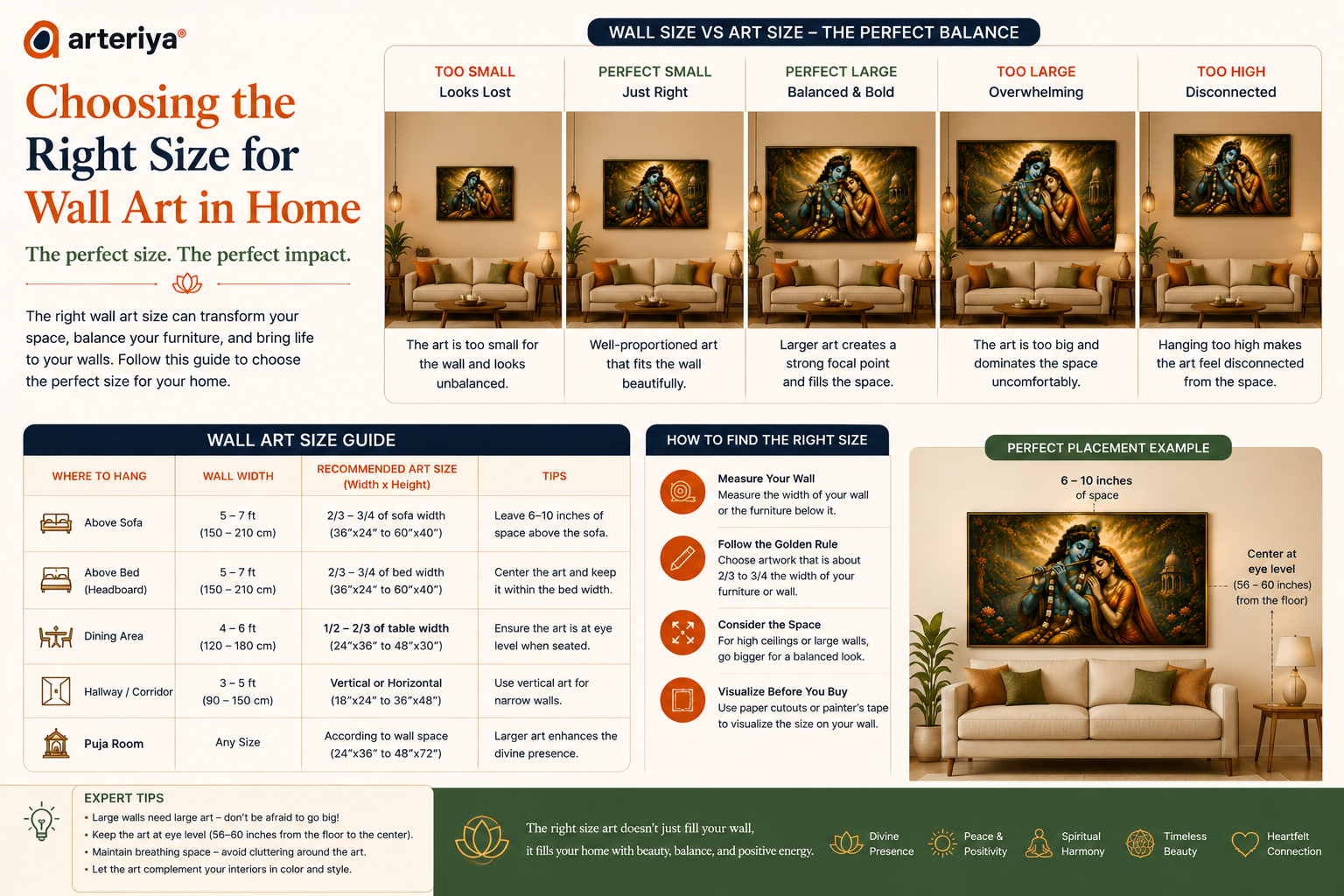
Wall art plays a major role in defining the mood, personality, and visual balance of a home. Whether your interior style is modern, minimalist, traditional, luxury, or contemporary, the size of your artwork can dramatically affect how a room feels.
Many homeowners spend time selecting beautiful paintings, but overlook one critical detail — choosing the correct size. Even the most stunning artwork can feel awkward if it’s too small for the wall or overwhelmingly large for the room.
From oversized statement pieces to compact gallery arrangements, selecting the right wall art size helps create harmony, elegance, and professional-looking interiors.
In this complete guide, you’ll learn how to choose the perfect wall art size for every room in your home, including expert sizing rules, placement ideas, furniture alignment tips, and modern interior styling recommendations.
Why Wall Art Size Matters
The size of artwork affects:
- Room balance
- Visual flow
- Interior proportions
- Focal point creation
- Spaciousness
- Overall aesthetics
Correctly sized artwork:
- Makes interiors feel cohesive
- Enhances luxury appeal
- Prevents empty-looking walls
- Creates stronger visual impact
Poorly sized artwork can make a room feel:
- Cluttered
- Empty
- Unbalanced
- Visually disconnected
That’s why professional designers always consider wall proportion before selecting art.
Understand Basic Wall Art Sizing Rules
The 60–75% Rule
A widely used interior design rule suggests:
- Artwork should occupy roughly 60–75% of the available wall width.
This creates balanced proportions without overcrowding the space.
Example:
If your wall space above a sofa is 90 inches wide:
- Ideal artwork width = approximately 54–67 inches
This can include:
- One oversized piece
- Multiple framed artworks
- A gallery wall arrangement
Measure the Available Wall Space
Before purchasing artwork:
- Measure the wall width
- Exclude furniture width
- Consider nearby décor
- Account for breathing room
Avoid measuring the entire wall if furniture occupies part of the space.
Instead, focus on the visible usable area.
Choosing Wall Art Size by Room
Living Room Wall Art Sizes
The living room usually benefits from larger statement artwork.
Small Living Rooms
Best sizes:
- 18×24 inches
- 24×36 inches
Perfect for:
- Apartments
- Compact homes
- Minimal interiors
Medium Living Rooms
Best sizes:
- 36×48 inches
- 40×60 inches
These create balanced focal points above sofas or consoles.
Large Living Rooms
Best sizes:
- 48×72 inches
- Oversized canvases
- Multi-panel artwork
Large walls need artwork with stronger visual presence.
Bedroom Wall Art Sizes
Bedrooms require softer and more calming proportions.
Above Queen Beds
Ideal sizes:
- 24×36 inches
- 36×48 inches
Above King Beds
Ideal sizes:
- 48×60 inches
- 48×72 inches
Oversized horizontal artwork works beautifully behind headboards.
Dining Room Wall Art Sizes
Dining spaces usually suit medium-to-large horizontal art.
Recommended:
- 36×48 inches
- 40×60 inches
Horizontal pieces visually widen the room.
Hallway and Staircase Art Sizes
Narrow spaces work better with:
- Vertical artwork
- Tall frames
- Stacked gallery arrangements
Best sizes:
- 18×36 inches
- 24×48 inches
Wall Art Size Based on Furniture
Above Sofas
Artwork should generally cover:
- Around two-thirds of sofa width
Example:
- 84-inch sofa → 56-inch artwork
This creates ideal visual balance.
Above Beds
Artwork should align proportionally with:
- Headboard width
- Bed size
Tiny artwork above large beds looks disconnected.
Above Consoles and Sideboards
Choose artwork slightly narrower than the furniture underneath.
This creates a balanced layered composition.
Oversized Art vs Small Art
Oversized Artwork
Best for:
- Luxury interiors
- Modern homes
- Open layouts
- Statement walls
Benefits:
- Creates drama
- Simplifies styling
- Makes rooms feel premium
Small Artwork
Best for:
- Gallery walls
- Compact spaces
- Minimal décor
- Layered styling
Benefits:
- Flexible arrangement
- Easier budget management
- Artistic customization
Single Artwork vs Gallery Walls
Single Large Artwork
Creates:
- Clean focal points
- Modern sophistication
- Spacious appearance
Best for:
- Minimalist interiors
- Luxury styling
Gallery Walls
Use multiple smaller pieces arranged together.
Best for:
- Creative interiors
- Personalized styling
- Layered visual storytelling
Maintain consistent spacing for cohesive appearance.
Choosing the Right Orientation
Horizontal Art
Best for:
- Wide walls
- Sofas
- Beds
- Dining areas
Creates a broader visual effect.
Vertical Art
Best for:
- Staircases
- Narrow walls
- Hallways
- Entryways
Makes ceilings feel taller.
Square Art
Perfect for:
- Symmetrical spaces
- Modern homes
- Minimalist interiors
Provides balanced visual harmony.
Ideal Hanging Height
Even perfectly sized artwork looks wrong if hung improperly.
Standard Rule
The center of the artwork should generally sit:
- Around 57–60 inches from the floor
This creates comfortable eye-level viewing.
Hanging Above Furniture
Leave:
- 6–10 inches between artwork and furniture
Too much space disconnects the composition visually.
Choosing Art Size Based on Ceiling Height
Standard Ceilings
Medium-sized artwork works best.
High Ceilings
High ceilings can support:
- Oversized canvases
- Vertical artwork
- Large gallery walls
These help fill vertical space elegantly.
Best Wall Colors for Artwork
Neutral wall colors help artwork stand out beautifully.
Popular Choices
- Warm white
- Beige
- Ivory
- Taupe
- Light grey
These tones suit both modern and traditional interiors.
Lighting and Artwork Size
Small Artwork
Requires:
- Focused spotlights
- Compact wall lighting
Large Artwork
Benefits from:
- Wall wash lighting
- Multiple spotlights
- Warm LED illumination
Good lighting enhances texture and depth.
Common Wall Art Sizing Mistakes
Choosing Art That’s Too Small
Tiny artwork on large walls looks incomplete.
Overcrowding Small Walls
Oversized artwork can overwhelm compact spaces.
Hanging Too High
This breaks visual balance.
Ignoring Furniture Proportion
Artwork should visually connect with surrounding furniture.
Using Too Many Small Frames
Excessive small pieces can create clutter.
Modern Wall Art Trends in 2026
Interior trends increasingly favor:
- Oversized statement artwork
- Neutral-toned canvases
- Textured wall art
- Minimal luxury styling
- Earthy modern aesthetics
- Large single focal pieces
Many homeowners now prefer fewer but larger artworks for cleaner interiors.
Tips from Interior Designers
Use Painter’s Tape First
Outline artwork dimensions on the wall before hanging.
This helps visualize proportions.
Consider Viewing Distance
Large artwork needs adequate distance for comfortable viewing.
Maintain Breathing Room
Leave enough blank wall space around artwork for a premium gallery-style appearance.
Match Art with Interior Style
Minimalist homes often suit oversized simple artwork, while traditional interiors may benefit from layered gallery arrangements.
Final Thoughts
Choosing the right wall art size is essential for creating balanced, elegant, and visually appealing interiors. The perfect artwork size enhances:
- Room proportions
- Luxury aesthetics
- Emotional atmosphere
- Design harmony
Whether you prefer oversized statement pieces or carefully curated gallery walls, the key is proportion and balance.
A properly sized artwork doesn’t just decorate a wall — it transforms the entire feeling of the room.
FAQs
What size wall art is best for living rooms?
Large or medium-sized artwork usually works best, depending on wall dimensions.
How big should artwork be above a sofa?
Typically around two-thirds of the sofa width.
Is oversized wall art trending?
Yes. Oversized statement artwork is extremely popular in modern interiors.
What is the ideal hanging height?
The artwork center should generally sit around 57–60 inches from the floor.
Can small artwork work on large walls?
Yes, if grouped together in a gallery wall arrangement.
Which orientation is best?
Horizontal art suits wide walls, while vertical art works better on narrow spaces.
How much space should be left between art and furniture?
Usually 6–10 inches.
Are gallery walls still in style?
Yes. Curated gallery walls remain highly popular.
Which wall colors work best with artwork?
Neutral tones like beige, ivory, and warm white work beautifully.
Should artwork match furniture color?
It should complement the room palette, but exact matching isn’t necessary.


